Pentagon Official Predicts Ukraine War Will Persist Through Winter
Elbridge Colby told NATO allies that Russia is mobilizing for a long conflict, while his criticism of Ukrainian deep strikes drew sharp rebukes from European partners in Brussels.
By News Media House Staff ·
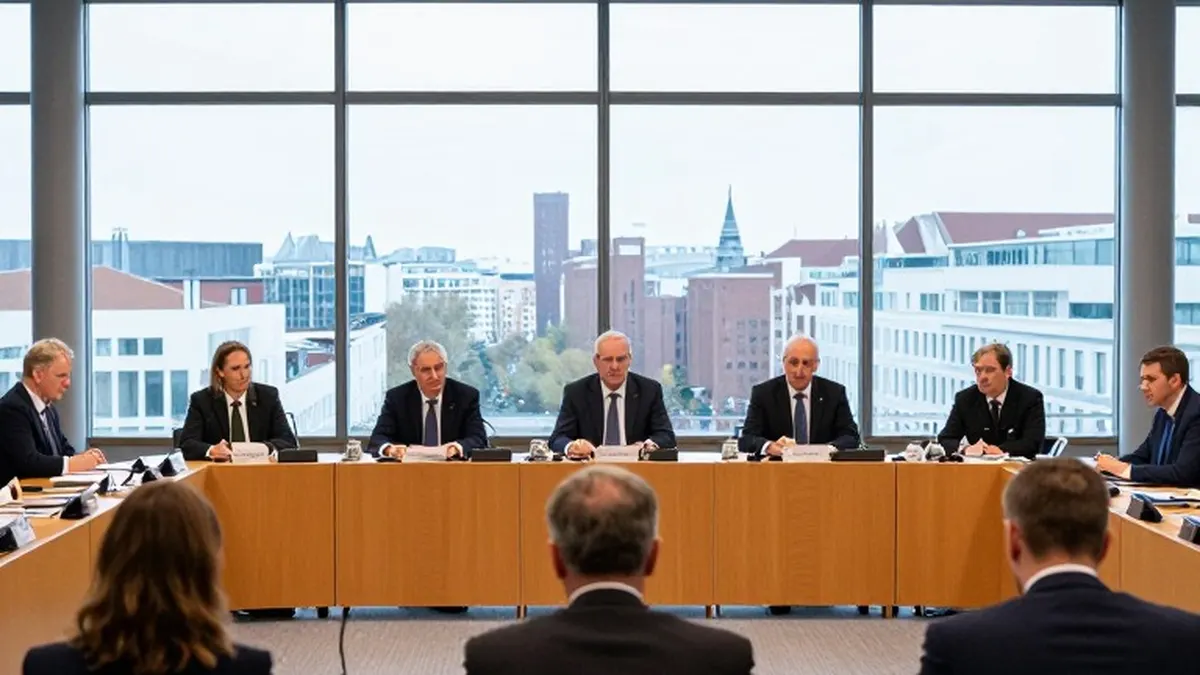
US Undersecretary of Defense Elbridge Colby informed NATO members in Brussels on November 17 that Moscow is likely to sustain its military operations in Ukraine throughout the winter months. Despite ongoing diplomatic efforts by Washington to secure a cease-fire and a permanent peace deal, Colby indicated that the conflict is expected to endure as the season changes.
Speaking at the Ukraine Defense Contact Group, an informal coalition of approximately 50 nations that coordinates military aid for Kyiv, Colby outlined the current strategic landscape. The group, also known as the Ramstein group, met at a US air base in Germany for its initial discussions. Colby stated that as winter approaches, Russia appears to be increasing its manpower and mobilizing its war economy for a prolonged campaign, urging all parties to prepare for a lengthy conflict.
The defense undersecretary reaffirmed that President Donald Trump remains committed to ending the war on terms that ensure a durable peace. This diplomatic push is expected to gain momentum when Trump meets with Russian President Vladimir Putin and Chinese leader Xi Jinping in Shenzhen. The trilateral meeting is anticipated to focus heavily on the war and various initiatives aimed at concluding it.
On the same day, Trump’s peace envoys, Jared Kushner and Steve Witkoff, are scheduled to meet in Berlin with the Coalition of the Willing. This grouping, led by Germany, France, and Britain, is designed to support Washington’s mediation efforts. The coalition may also organize a peacekeeping mission should a cease-fire be successfully negotiated.
Colby’s briefing was marked by significant friction regarding Ukraine’s recent tactical decisions. He criticized Kyiv’s deep strikes into Russian territory, specifically targeting energy facilities and the warehouses of the e-commerce giant Wildberries. Colby assessed that these attacks have not been effective in ending the war or slowing Russian advances on the front line.
The official argued that strikes on civilian infrastructure likely hardened the resolve of the Russian public and the Kremlin’s willingness to escalate. He noted that while Ukraine should not be forced to fight with its hands tied, strikes focused directly on the front line and the battle area are a distinct matter from those targeting deeper domestic sites.
These remarks came shortly after Ukraine struck the Kerch Bridge, the only direct road and rail link between mainland Russia and the annexed Crimean Peninsula. The attack severely disrupted supply lines to the occupied region. Kyiv has intensified strikes on targets inside Russia in response to the Kremlin’s heavy attacks on Ukrainian civilian energy infrastructure, which have caused fuel shortages ahead of the winter.
Ukrainian Prime Minister Serhiy Koretskiy told RFE/RL on November 16 that Russia’s current efforts are designed to break the spirit of the Ukrainian people as the cold months approach. However, Colby’s critical assessment of these deep strikes was not well received by all allies present in Brussels.
German Defense Minister Boris Pistorius rejected Colby’s stance, calling the criticism of Ukrainian air strikes quite a stupid thing. Pistorius suggested that it would be more productive to criticize the daily terrorist strikes by Russia on Ukraine’s energy, water, and heating infrastructure. British Defense Secretary Wes Streeting echoed this sentiment, stating that Ukraine’s strikes helped degrade Putin’s war machine, thereby buying time and saving lives.
Originally published by News Media House