Ukrainian troops launch surprise attack after crawling nine miles through underground gas pipeline
Soldiers from the Khartiia Corps navigated a decommissioned Soviet era pipeline to bypass Russian defenses and strike behind enemy lines near Kupiansk.
By News Media House Staff ·
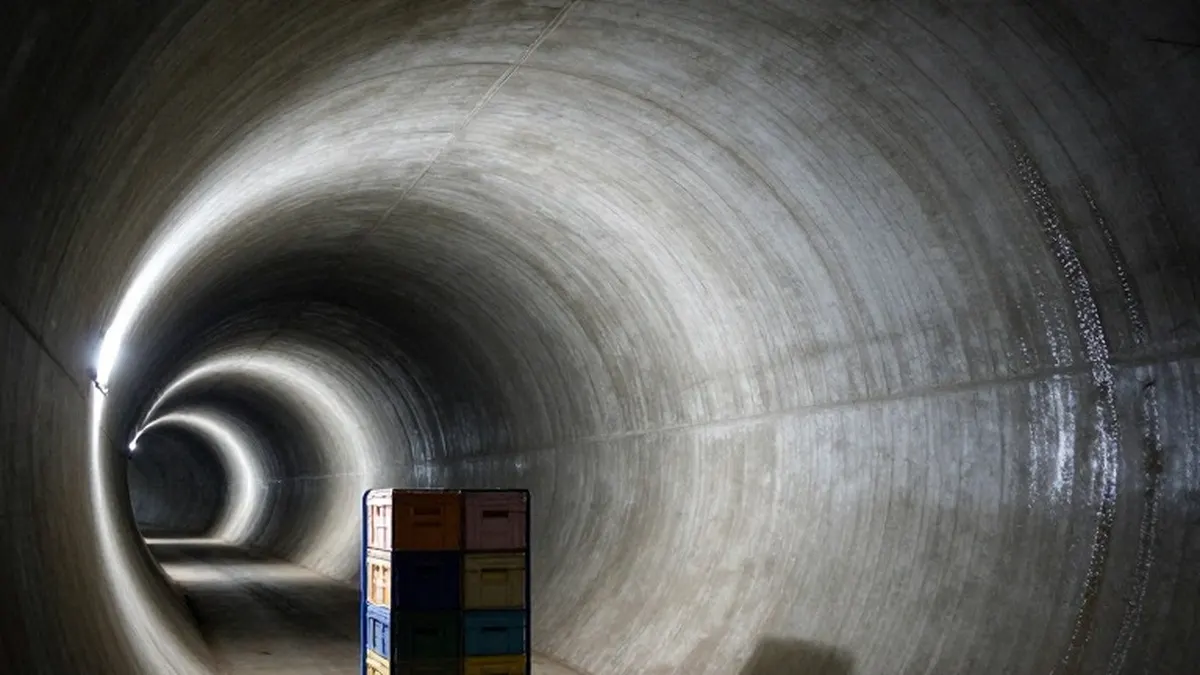
Ukrainian military personnel recently executed a complex tactical maneuver by traveling through a decommissioned underground gas pipeline to surprise Russian forces. The operation, which took place over the past few months in the Kharkiv region, was designed to prevent Russian troops from advancing toward the strategic city of Kupiansk. Members of the Ukrainian National Guard's Khartiia Corps detailed the mission in a series of social media posts, describing the arduous journey as a critical component of a broader defensive strategy.
The soldiers spent weeks moving through the roughly three-foot-wide tunnel, which was part of the Soviet era infrastructure. According to the unit, troops crawled or were pulled on wheeled carts for approximately nine miles before emerging behind Russian positions. The pipeline had been out of service for years, leaving behind pooled freezing water and lingering traces of natural gas. The conditions were described as extremely harsh, with the confined space forcing soldiers to move on their knees. This constant motion caused injuries, while dirt accumulated in weapon mechanisms, leading to malfunctions during close-quarters combat.
Russian forces had established barriers within the pipeline to block potential intrusions. Ukrainian soldiers reported that some of these barricades included the bodies of fallen Russian troops. The Khartiia Corps stated that some of its members remained underground for as long as a month during the operation. To manage the movement of supplies, the unit used electric winches to propel themselves through the pipe and transported ammunition on small wheelbarrows. The claims regarding the specific details of the battle have not yet been independently verified, though Russian authorities acknowledged the raid.
The use of underground infrastructure highlights a significant shift in modern warfare tactics driven by the prevalence of drone technology. With the front line stretching nearly 1,000 miles across eastern Ukraine, both sides rely heavily on surveillance and attack drones to identify targets. Moving above ground exposes soldiers to near real-time observation, making subterranean routes an attractive, albeit dangerous, alternative. Analysts note that such operations demonstrate how drone warfare has transformed battlefield dynamics, forcing troops to seek concealment in places once thought obsolete.
This is not the first time underground pipelines have been utilized in the conflict. In September 2025, Russian forces attempted a similar tactic, using sections of underground pipeline to move troops closer to Ukrainian positions near the northern outskirts of Kupiansk. The goal in both instances was to evade aerial detection and reposition forces effectively. While underground environments present risks such as limited ventilation, restricted movement, and navigational challenges, soldiers involved in the recent Ukrainian mission indicated that these hazards were preferable to the dangers faced on the surface.
One member of the Khartiia Corps, using the callsign Sgt. Santa, described the sensory experience of the tunnel. He noted that the environment was damp, dark, and smelled strongly of decay due to the presence of corpses. Despite these grim conditions, the soldier stated that he felt safer underground than he would have been in the open. The unit reported that the operation helped stop Russian forces from gaining additional ground near Kupiansk, a city that Ukrainian troops recaptured from Russian invaders in 2022.
The timing of the operation is significant as it occurs ahead of what may be a critical juncture in the ongoing war. President Donald Trump has pushed for a peace agreement, campaigning on the promise of ending the conflict quickly. However, Kyiv and its European allies express concern that the White House appears to be favoring Russia. They fear that major energy deals may be on the table without significant concessions in return, while Ukraine faces pressure to make territorial compromises without concrete security guarantees. The successful pipeline raid serves as a demonstration of Ukrainian resilience and tactical innovation in this evolving strategic landscape.
The Khartiia Corps has not confirmed the number of Ukrainian casualties resulting from the operation. However, at least one report by Britain's Telegraph newspaper mentioned that Ukrainian forces recovered the body of a fallen comrade from inside the underground gas pipeline. This incident underscores the human cost of the conflict, even as military leaders continue to adapt their strategies to counter the technological advantages of modern warfare. The operation remains a notable example of how legacy infrastructure can play a vital role in contemporary military engagements.
Originally published by News Media House
More News · National news · Report a business · Got a Story?