US military chief heads to Saudi Arabia to assess air defense systems
Admiral Brad Cooper and dozens of US advisors are expected in the kingdom to evaluate air defense capabilities amid ongoing Houthi attacks and shifting regional dynamics.
By News Media House Staff ·
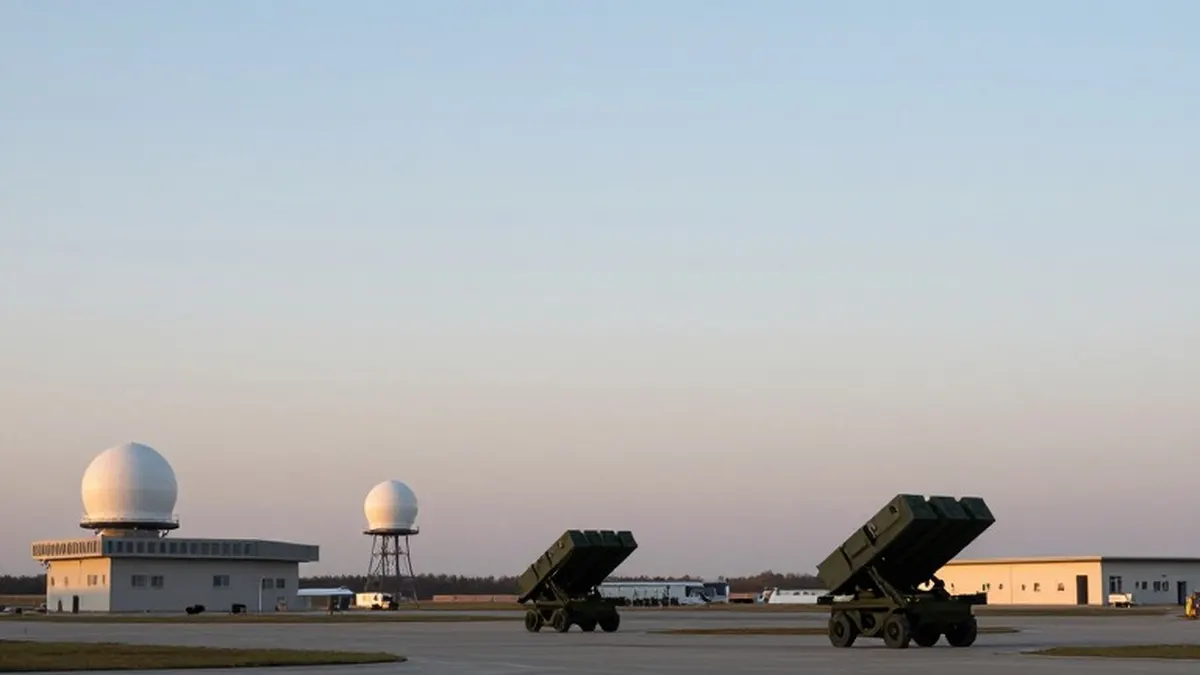
Admiral Brad Cooper, the commander of US Central Command responsible for forces in the Middle East, is scheduled to arrive in Saudi Arabia this week. He will be accompanied by a team of advisors tasked with examining the kingdom's air defense capabilities. Multiple western officials familiar with the matter told Middle East Eye that the visit involves a significant deployment of military expertise to support Riyadh.
According to these officials, who spoke on the condition of anonymity, more than three dozen US military advisors are traveling to Saudi Arabia to assist with air defense operations. They noted that some members of this advisory team have already begun arriving in the country. The Pentagon was contacted for comment regarding the visit but had not provided a response by the time of publication.
The timing of the visit is particularly sensitive, as Saudi Arabia is currently dealing with a series of aerial attacks by the Iran-aligned Houthi forces. This occurs during a period of shifting dynamics in US-Saudi relations. President Donald Trump recently stated that the kingdom was disintegrating and claimed that Saudi Arabia and other Gulf states had requested that he not resume the war on Iran due to their military vulnerabilities.
Saudi Arabia has maintained a strategic alliance with the United States since the end of World War II. However, the kingdom is currently engaged in a difficult conflict in Yemen, where Houthi forces have achieved significant military gains. These groups have targeted key assets including Saudi airports, energy infrastructure, and corporate offices, which threatens Riyadh's efforts to position the country as a safe hub for investment and tourism.
Middle East Eye previously reported that Houthi forces have also launched ground incursions into Saudi territory, adding another dimension to the conflict. The situation on the ground remains fluid, with recent announcements from Yemeni government forces indicating a withdrawal of troops from the strategic Bab al-Mandab area. This redeployment aims to secure the provisional capital, Aden, and neighboring governorates, though it results in the loss of territory that Saudi-backed forces had retaken during the autumn.
A western official familiar with the battlefield dynamics stated that while they did not expect Aden to fall due to local opposition to the Houthis, the overall situation is very bad for Saudi Arabia and its allies. In a move that signaled frustration in Riyadh, King Salman removed the commander overseeing the coalition forces in Yemen on Monday.
Despite possessing one of the largest stockpiles of Patriot interceptors in the Gulf, as noted by US officials, Saudi Arabia faces the challenge of protecting a vast territory against low-cost Houthi drones. Some experts have raised questions regarding how the kingdom is deploying its air defense systems in response to these threats.
The urgency of the situation was highlighted last month when Riyadh airport was attacked four times within a single week. One of these strikes resulted in the deaths of at least 13 people and left 300 others injured, with many of the victims being Hajj pilgrims. The arrival of US advisors coincides with regional concerns about a potential escalation in fighting between the US and Iran. President Trump recently told radio host Hugh Hewitt that he would consider it a defeat if the Islamic Republic remained in power at the end of his term, a statement he affirmed with the word absolutely.
The visit underscores the continued importance of the US-Saudi military partnership even as political rhetoric and battlefield realities create new pressures on the alliance. The focus on air defense suggests a prioritization of protecting critical infrastructure and civilian populations from sustained aerial campaigns.
Originally published by News Media House