Investors Await Technical Indicator Signal as Tech Stocks Face New Pressures
Market volatility driven by AI sector jitters and infrastructure reports is prompting traders to watch for an oversold signal before increasing equity exposure.
By News Media House Staff ·
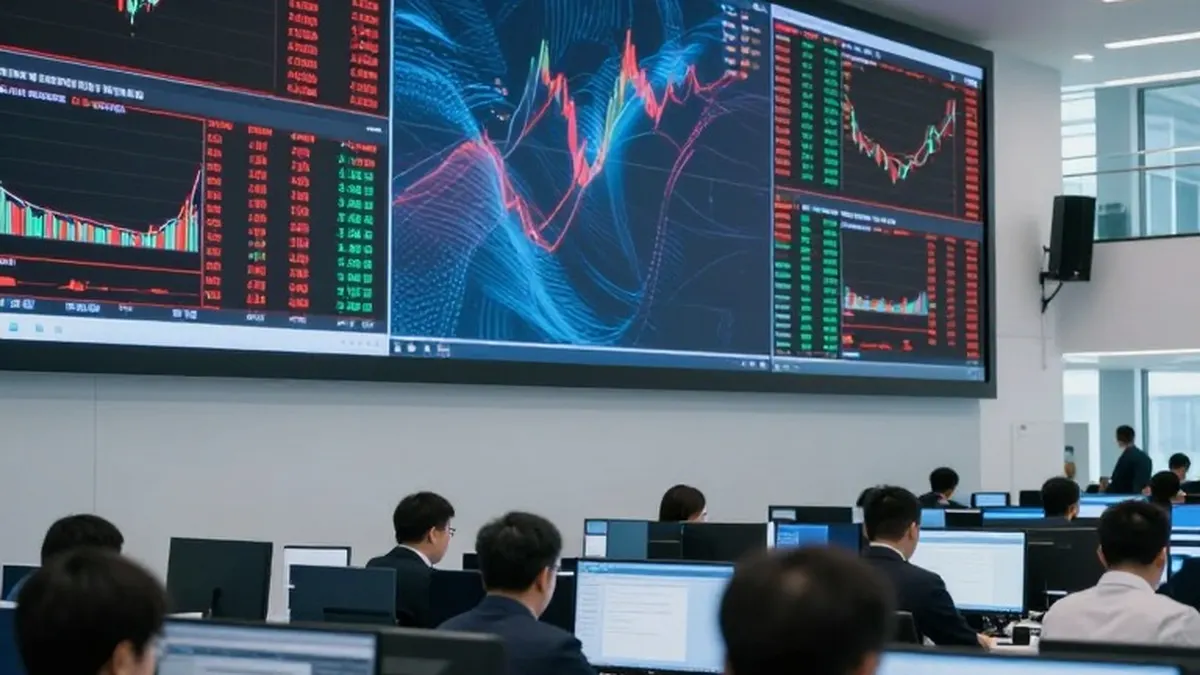
U.S. equity markets experienced a notable decline on Tuesday, with the S&P 500 and Nasdaq Composite both dropping approximately 1%. This downturn follows a previous session in which the S&P 500 fell by roughly 2% due to sustained pressure on stocks involved in artificial intelligence infrastructure. The latest sell-off began shortly after CNBC's Morning Meeting segment, triggered by a report from CNN regarding an outage on the National Security Agency's classified internal communications network.
This incident has intensified investor anxiety in a market already sensitive to recent high-profile technology disruptions. Within the S&P 500, Salesforce emerged as the worst-performing stock. It fell alongside other enterprise software titles, a move that appears to reflect selling activity ahead of the anticipated initial public offering by Anthropic. The AI company is scheduled to price its shares on Wednesday, with trading set to commence on the Nasdaq under the ticker symbol ANT on Thursday.
The recent string of technology outages may be further weighing on the sector. Salesforce shares have now relinquished all gains associated with its Claudeforce partnership with Anthropic, which was announced on August 26 alongside quarterly results that exceeded expectations. Despite this reversal, analysts have decided to maintain their current rating on the stock for the time being.
In response to the recent stretch of market volatility, the CNBC Investing Club is monitoring the S&P Short Range Oscillator for a specific signal to increase stock purchases. The portfolio currently holds a large cash position, exceeding 16% of its total value, which is being kept in reserve. This technical tool measures market buying and selling pressure. As of Monday's close, the oscillator stood at -2.45%, indicating that the market had not yet reached an oversold state. A reading below -4% is required to signal that the market is oversold.
Traders will observe whether Tuesday's decline pushes the index into that oversold territory, a condition that historically prompts a gradual increase in equity buying. The most recent instance of the oscillator entering oversold territory occurred on September 10, when the S&P 500 closed at 7,591.70. By the time the index exited this condition on October 6, it had rebounded to 7,818.93. Although the recovery path was volatile and not linear, the eventual bounce from the oversold level proved to be a valid trading opportunity.
Attention now shifts to Nvidia, which is set to report earnings after the market close on Wednesday. Analysts are projecting revenue of $109.11 billion and adjusted earnings per share of $2.48, according to LSEG data. However, market participants believe that the company's commentary on future revenue growth and gross margins will carry more weight than the reported financial figures themselves.
Ahead of Wednesday's opening bell, several major retailers including TJX Companies, Target, and Lowe's are scheduled to release their earnings reports. Additionally, Tencent Holdings will provide its financial update. The economic calendar for the day includes data on housing starts and building permits, as well as the release of the minutes from the Federal Open Market Committee's October meeting.
For subscribers of the CNBC Investing Club, a trade alert is issued before Jim Cramer executes a trade in his charitable trust's portfolio. Cramer typically waits 45 minutes after sending the alert before buying or selling a stock. If the stock has been discussed on CNBC television, a 72-hour waiting period is observed after the alert is issued before the trade is executed.
Originally published by News Media House
More News · National news · Report a business · Got a Story?