Federal Regulation: NHTSA Proposes Cyan Lights for Autonomous Vehicles
The National Highway Traffic Safety Administration has introduced a draft rule requiring driverless cars to use a specific blue-green illumination to signal their automated status to surrounding traffic.
By Adrian Salazar ·
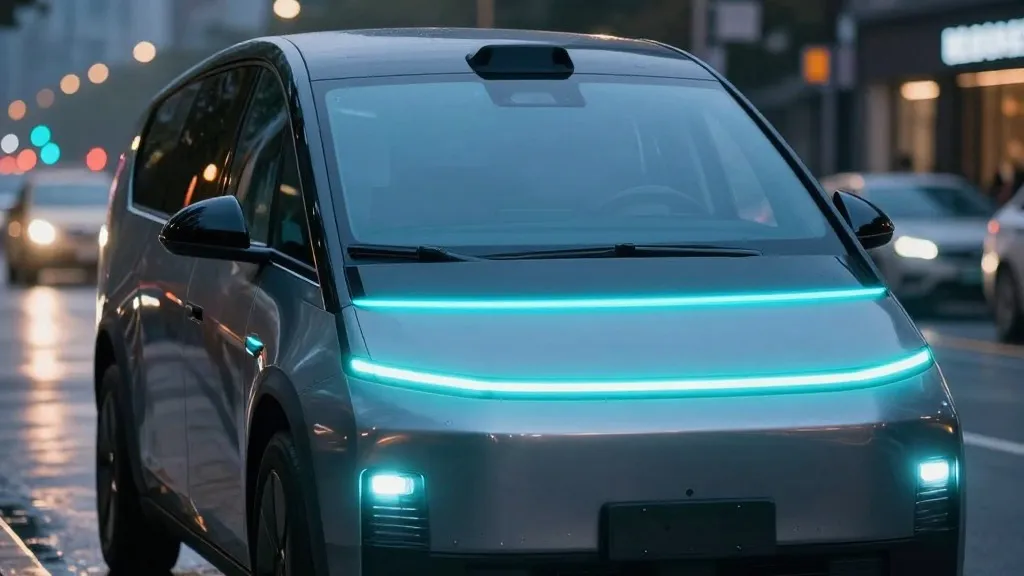
The National Highway Traffic Safety Administration has released a proposed update to federal vehicle safety standards that would designate a specific cyan-colored light for autonomous vehicles. This regulatory move aims to resolve a long-standing industry debate regarding how driverless cars should visually communicate that no human is operating the controls. The agency seeks to establish a uniform national signal that distinguishes robotaxis from traditionally driven automobiles.
The proposal amends Federal Motor Vehicle Safety Standard No. 108 to create a clear visual cue for law enforcement and other road users. By selecting a blue-green hue, regulators intend to fill a gap in the current automotive lighting palette, which already reserves red, amber, white, and flashing blue or red lights for functions such as braking, turning, and emergency services. NHTSA argues that cyan will provide a distinct and consistent indicator that an automated driving system is in control without causing confusion among drivers who are accustomed to existing color codes.
While the adoption of these lights would be optional for manufacturers, the rule would strictly define their color, brightness, and placement if chosen. This standardization is designed to prevent a fragmented market where different companies use varying signals, ensuring that any automaker implementing the feature does so in a legally consistent manner. The proposal also references existing state-level approvals, such as those granted to Mercedes-Benz for turquoise lights on its Level 3 Drive Pilot vehicles, although that automaker has since shifted its strategy to a different system.
Beyond the new lighting requirements, the draft rule seeks to eliminate several provisions that are impractical for vehicles without human drivers. Current regulations mandate the presence of physical hazard switches, manual beam shifters, and turn levers, all of which are unnecessary for fully autonomous operations. NHTSA proposes removing these requirements to streamline the design process. Additionally, the agency is updating the 12.8-volt testing standard to accommodate modern LED architectures and is considering revising rules that dictate the vertical positioning of high-beam and low-beam lights.
This initiative is part of a broader effort by the Department of Transportation to facilitate the deployment of autonomous vehicles by reducing administrative burdens. The goal is to allow automakers to build vehicles that lack traditional human-centric controls, such as steering wheels and pedals, without facing excessive regulatory hurdles. Major players in the autonomous space, including Waymo, Nuro, Zoox, GM, and Mercedes, would benefit from a unified federal framework for their designs.
Despite these efforts to streamline regulations, the agency continues to enforce existing rules strictly where applicable. Last month, NHTSA initiated an audit query regarding the Tesla Cybercab, examining the technical data and processes used during its certification. The inquiry focuses on the vehicle’s lack of specific design features, such as sideview mirrors, pedals, and a steering wheel, which are currently required under the standard. This action highlights the ongoing tension between the desire to modernize vehicle regulations and the need for rigorous compliance with current safety codes.