Nvidia CEO Demonstrates Microduck Robots, Driving Preorders Past 20,000
A viral keynote demonstration of autonomous duck-shaped robots has positioned the device as a leading contender for this year's most popular holiday gift.
By Hiroshi Gupta ·
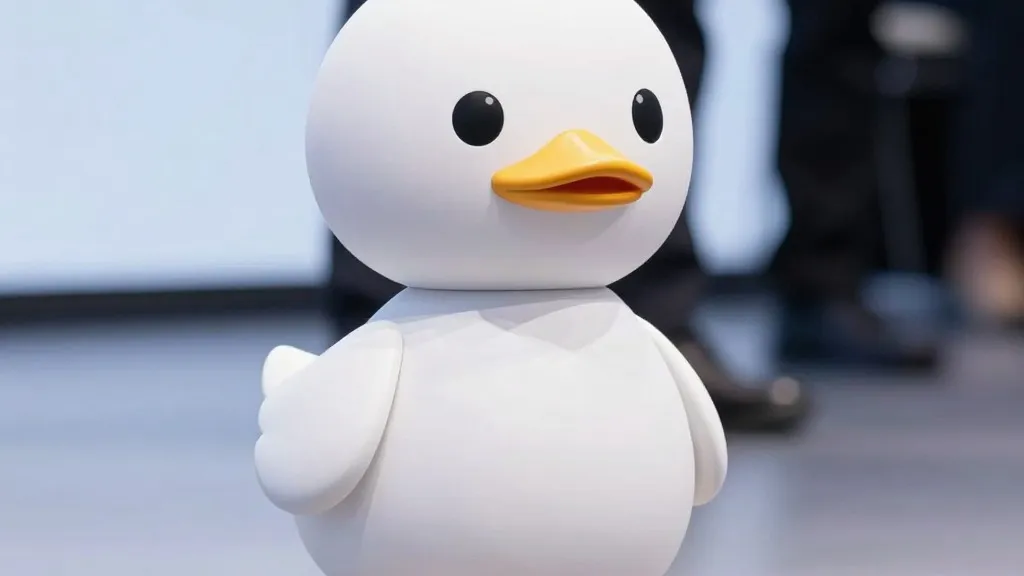
Jensen Huang, the chief executive officer of Nvidia, captivated the audience at the company's GTC Berlin conference earlier this week by interacting with a group of small, autonomous robots known as Microducks. The demonstration, which quickly gained widespread attention on social media, featured the CEO commanding the devices to perform various physical actions. The footage showed the robots waddling, sitting, and executing somersaults in response to voice commands, a display that highlighted the practical applications of Nvidia’s artificial intelligence technology in consumer hardware.
The immediate commercial response to the demonstration was substantial. According to Clem Delangue, the head of Hugging Face, preorders for the Microducks exceeded 20,000 units within roughly 24 hours of the keynote. This rapid uptake suggests strong consumer interest in the product, which is scheduled for delivery in time for the Christmas season. Delangue indicated that the device has the potential to become the best-selling robot of the year, noting that while it is marketed to a broad audience, promotional materials have also emphasized its appeal to adults.
The Microducks are developed by Pollen Robotics, a company that was acquired by Hugging Face in 2025. Following Nvidia’s acquisition of Hugging Face in September of this year, the robotics division effectively became part of the GPU manufacturer’s portfolio. This is not Hugging Face’s first foray into physical robotics; the company previously released the Reachy Mini, another compact robot that garnered significant attention for its design and functionality. The integration of these assets allows Nvidia to expand its reach beyond data centers into the consumer and educational technology sectors.
From a technical perspective, the Microducks utilize Nvidia’s technology stack for their development. The robots are trained through simulations where they learn fundamental behaviors such as walking, sitting, and standing. These pre-trained tricks are included in the standard firmware that ships with the device. Furthermore, Pollen Robotics has stated that owners will have the ability to train their specific units with new maneuvers and subsequently share these custom behaviors with the broader user community, fostering a collaborative environment for developers and enthusiasts.
The presentation of the Microducks provided a lighter tone for a week that had been dominated by more serious discussions in the artificial intelligence sector. Recent events saw the industry grappling with concerns over AI’s involvement in a series of cyberattacks, leading to a period of heightened scrutiny regarding the technology’s impact on global security. Against this backdrop, the playful demonstration of the Microducks served as a reminder that AI also has significant potential for entertainment and consumer engagement.
As the holiday season approaches, the Microducks are positioned to compete with other popular toys. The combination of their open-source nature, the backing of Nvidia’s substantial resources, and their distinctive aesthetic has generated considerable buzz. The company is monitoring the demand closely to ensure that production meets the projected sales targets. The success of the Microducks will likely influence how the market perceives the viability of small, autonomous robots as mainstream consumer products.
The next steps for the device involve the finalization of manufacturing and logistics to ensure timely delivery before Christmas. Nvidia and Hugging Face are expected to provide further updates on the rollout, including any additional software features or community-driven updates that may be released alongside the hardware. The performance of the Microducks in the coming weeks will be a key indicator of the broader adoption of AI-driven robotics in the consumer market.