Tesla Builds Own Maps to Fix FSD's Speed Limit and Parking Failures
The automaker is developing an internal mapping system powered by its vehicle fleet to address persistent navigation errors in its Full Self-Driving software.
By Jabari Dubois ·

For years, Tesla executives argued that relying on detailed maps made autonomous driving systems fragile and brittle. Now, the company is doing exactly what it once dismissed, building its own proprietary mapping system to correct common errors in its Full Self-Driving software. This shift marks a significant departure from the company's long-standing public stance that vision and artificial intelligence alone are sufficient for navigation.
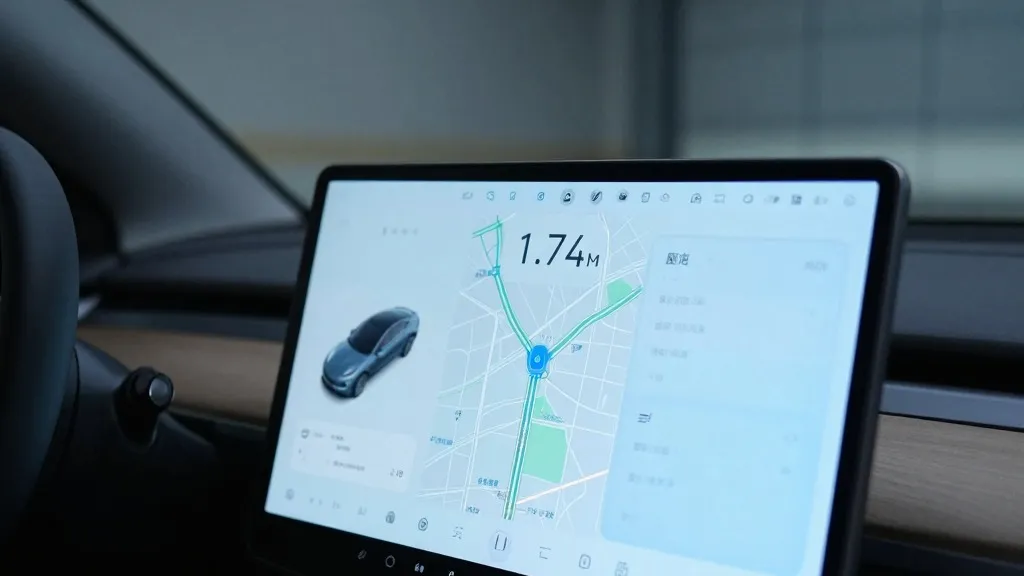
The announcement came during the Q3 2026 earnings call, where Tesla's VP of AI, Ashok Elluswamy, detailed the new approach. He confirmed that the company is developing a new AI-based mapping and navigation architecture. This system will be fed by data collected from the vehicle fleet, allowing it to learn and improve over time. Elluswamy stated that Tesla should not depend on external providers for this critical infrastructure.
The decision follows feedback from retail investors who identified specific pain points with the current system. One shareholder noted that mapping remains a significant issue, particularly regarding speed limits, parking, and route selection. These three areas represent the most frequent complaints about the software's ability to interpret its surroundings without human intervention. The new system is designed to specifically target these weaknesses.
The rollout of this technology is already underway. It will begin with FSD version 15, initially handling the start and end of trips. Over the coming months, the system is expected to take over broader navigation tasks, including parking and destination management. The architecture is also intended to learn individual driver preferences and respond to voice commands, making the experience more personalized.
This move contradicts statements made by CEO Elon Musk as far back as 2019. During that year's Autonomy Day event, Musk described high-precision lane maps as a huge mistake and a really bad idea. He argued that relying on such maps made a system extremely brittle, a sentiment he paired with his famous criticism of lidar. At the time, the message was clear that Tesla would solve driving with cameras and AI alone, unlike competitors such as Waymo.
The need for better environmental understanding is evident in recent testing data. Last month, a Belgian road safety group found that FSD exceeded speed limits in 55% of the 30 km/h zones tested in Brussels. The vehicles averaged 44 km/h, often because the car's screen displayed an incorrect 50 km/h limit. In the United States, the NHTSA is currently weighing an investigation into claims that Tesla Robotaxis speed through active school zones, involving about 1,000 Model Y and Cybercab vehicles.
The new approach brings Tesla's strategy closer to that of Waymo than the company might prefer. Waymo uses sensor-equipped vehicles to map cities before launching service and updates those maps as the fleet operates. Tesla is now describing a similar process where cars collect visual data to feed a central map. While Waymo uses lidar for this task, Tesla is relying on its existing camera systems and the sheer volume of its fleet to build this knowledge base.
This development aligns with how Tesla's Robotaxi service currently operates, moving city by city within geofenced areas. Although Tesla is not yet talking about centimeter-level high-definition maps, a fleet-built map that grows in detail could easily evolve in that direction. For drivers in New York and New Jersey, this means the cars on the road may soon rely less on third-party data and more on a collective understanding built by millions of other Tesla vehicles.
The shift acknowledges that an end-to-end vision system still struggles with simple tasks like reading speed limit signs. If the solution requires a better map, then vision alone is not yet handling the job as originally promised. As Tesla pushes unsupervised FSD in customer cars toward Q2 2027, this new mapping layer will be a critical component in ensuring the system can reliably navigate complex urban environments.