Tesla voids seven-year Cybertruck reservations in Australia and New Zealand
The electric automaker is refunding deposits to customers who waited since 2019, citing the high cost of creating a right-hand-drive version for the two markets.
By Hiroshi Gupta ·
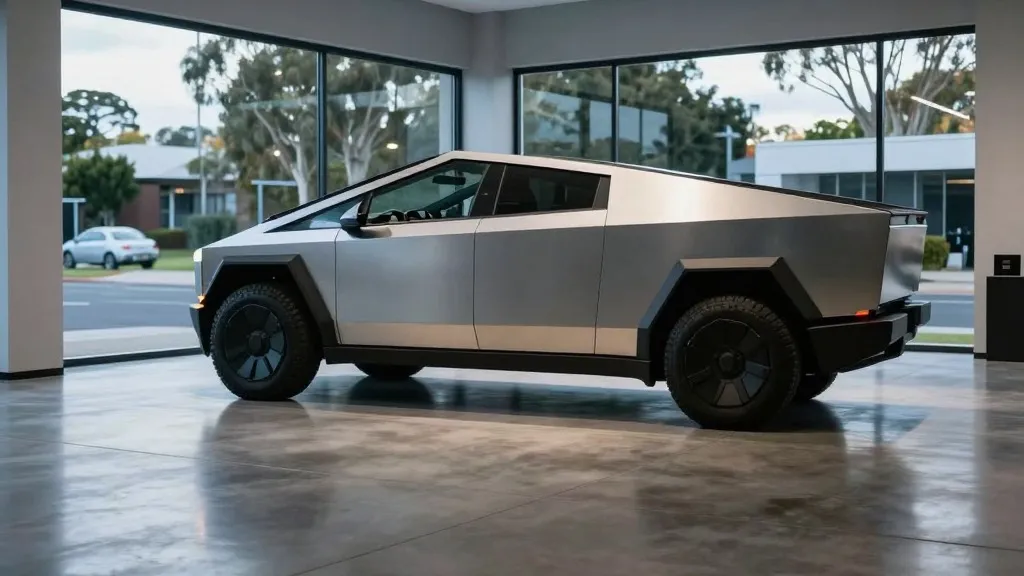
Tesla has officially ended the production of the Cybertruck for Australia and New Zealand, leaving thousands of customers who placed deposits seven years ago without the vehicle they reserved. The company sent emails to affected reservation holders this morning to inform them that their orders have been voided. Tesla stated that full refunds for all payments will be processed within 30 days. To soften the blow, the automaker is offering a free one-year subscription to its Full Self-Driving software for those who choose to purchase a new Model 3 or Model Y instead.
The decision marks the end of a long wait for buyers in the region, who began reserving the electric pickup in November 2019 with a 150 Australian dollar deposit. At the time, Australia was considered a significant market, with crowdsourced data indicating it was the third largest reservation region globally. Although Tesla never officially confirmed regional totals, tracking tools estimated around two million global reservations by 2023. The company had quietly closed the Australian reservation page in May 2022, replacing it with an update button, but did not issue refunds at that time.
The core obstacle to bringing the truck to these markets is its left-hand-drive design. Australia, New Zealand, the UK, and Japan all require right-hand-drive vehicles. Additionally, Australia has specific certification rules that add to the complexity and cost. Tesla argued that the current demand levels do not justify the significant investment required to re-engineer the vehicle for these two markets. The truck remains blocked in the European Union primarily due to pedestrian safety concerns, while successful international launches so far have been limited to left-hand-drive countries such as South Korea and the UAE.
Financial data from the third quarter of 2026 highlights the challenge. Tesla reported delivering only 8,295 units in the 'Other Models' category, a figure that now largely represents Cybertruck sales since the Model S and Model X production lines have closed. This volume equates to an annual pace of roughly 30,000 units, far below the production line capacity of 250,000 units. For a finance department, the numbers suggest that retooling the vehicle for a combined population of 33 million people in Australia and New Zealand is not a viable option.
The announcement came one day after Tesla released its third-quarter earnings. It follows a period where the company shipped a Cybertruck to Australia for a display tour and CEO Elon Musk hinted to shareholders that certification for other markets might occur the following year. However, no right-hand-drive version materialized. The current model is also more expensive and has less range than the original concept, making it a less attractive prospect for international buyers who would have paid a premium for an import-ready vehicle.
This move effectively cements the Cybertruck's status as a niche, predominantly American product. Tesla’s international strategy appears to focus on finding buyers for existing left-hand-drive inventory rather than expanding into new regulatory environments. While many Australian customers may have already canceled their pre-orders, the formal end to the reservations provides closure for the remaining thousands who waited nearly seven years for a delivery that will no longer come.